From the blog
When to let babies die
When is a premature baby so premature that we should consider them non-viable? When we do not intubate them and provide intensive care. Instead, we inform the parents that nothing can be done and provide excellent palliative care to help t
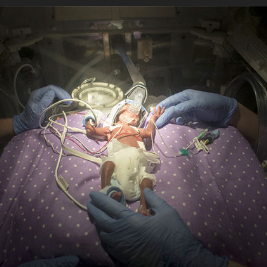
When is a premature baby so premature that we should consider them non-viable? When we do not intubate them and provide intensive care. Instead, we inform the parents that nothing can be done and provide excellent palliative care to help them die peacefully. There has always been disagreement about where the viability line should be drawn. A few years ago, experts from Europe and the US gathered in Norway to talk about the different approaches taken in different Scandinavian countries. In Sweden, they recommended resuscitation of babies born at 22 weeks and above, in Norway 23 weeks, and in Denmark 24 weeks. Each country’s policies were deeply rooted in their respective national and medical cultures. Each accepted the variation across the border. Much of the difference turned on questions on whether too many survivors would have unacceptably severe disabilities.
This week, I’m returning to Trondheim for a conference on shared decision making (SDM) in neonatology. I will be fascinated to learn how things have evolved in the five years since we last discussed these complex issues in Norway. Over those years, the borderline of viability has been slowly and steadily shifting downward in many parts of the world. I’ll be curious to discover whether differences persist in Scandinavian countries and, if so, how people understand the philosophical values and cultural forces that undergird differences. I am an advocate for SDM. I am aware of the many difficulties inherent in this nuanced approach. Still, as Churchill said about democracy, it may be the least-worst approach to these complicated decisions.
After Trondheim, I’ll be visiting Groningen in The Netherlands. That quaint university town is famous in neonatal bioethics as the place where Verhagen and Sauer developed a controversial protocol for neonatal euthanasia. Again, some countries followed the Netherlands while others objected vehemently to policies that allowed doctors to administer lethal injections to babies. I will be curious to see whether fears of slippery slopes were prescient or whether, instead, the Groningen Protocol resulted in fewer cases of neonatal euthanasia.
It should be an interesting week. I’ll be blogging about it all. Stay tuned…
Related writing.
Why the Dutch Keep Pediatric Euthanasia Illegal
Pediatric euthanasia in The Netherlands has a unique legal status - it is illegal, openly practiced, and well-regulated. The most surprising part isn't the law that enabled this — it's what happened after.
The Lost Aura of the Doctor in the Age of AI
	Artificial intelligence can now make difficult diagnoses, detect drug interactions, read medical images, predict outcomes, counsel patients — and even write peer reviews. As these capabilities expand, doctors risk becoming supervisors
The Tiniest Patients: Rethinking How We Decide
	When a baby is born at 22 or 23 weeks of pregnancy — half the normal gestational period — doctors and parents face one of the most agonizing decisions in all of medicine. Should they fight to keep the baby alive, knowing survival is u
When facts are not fixed: rethinking shared decision making at the margins of neonatal viability.
Parents and doctors face difficult decisions when a baby is born at the borderline of viability. Somehow, they must voice their values, shared concerns, and disagreements in a way that allows an initial decision about life-sustaining…
About the author
John D. Lantos is a pediatrician and bioethicist writing on AI in medicine, neonatal intensive care, and end-of-life decisions. His essays appear in JAMA, JAMA Pediatrics, the Hastings Center Report, the New England Journal of Medicine, and Aeon. Read more about John.