From the blog
Trying to Defend the Living World
Richard Powers is the most scientifically savvy novelist at work today. He was one of the first people in the world to have his genome sequenced. His novel, Generosity, creates a character modeled on George Church, who pursues genomic dream
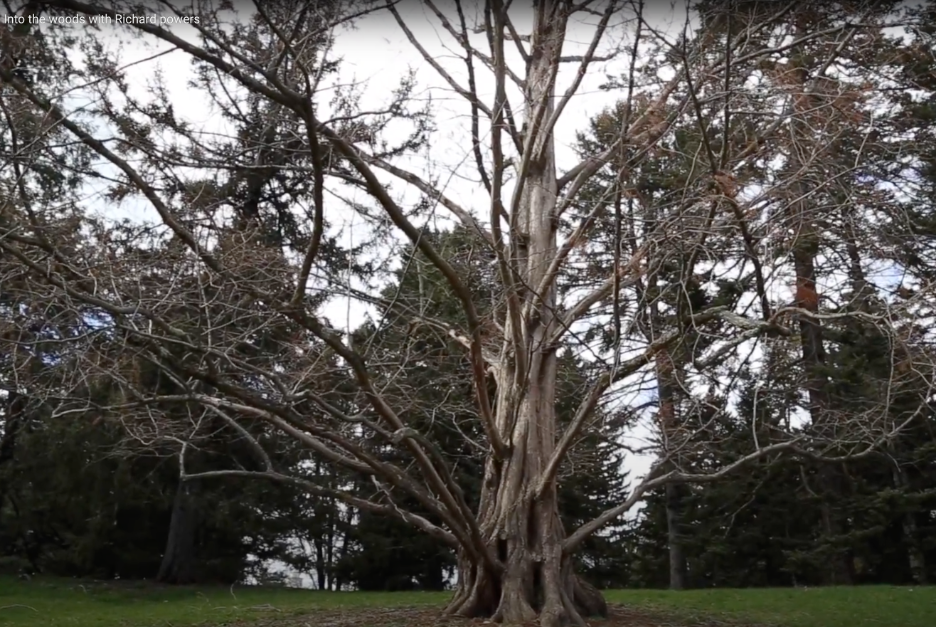
Richard Powers is the most scientifically savvy novelist at work today. He was one of the first people in the world to have his genome sequenced. His novel, Generosity, creates a character modeled on George Church, who pursues genomic dreams with the single-mindedness of Ahab. Often, in Powers’ novels, the idealistic efforts of scientists lead to unintended consequences. He has written about genetics, artificial intelligence, virtual reality, ecology, and astrobiology. He returns again and again explorations of the ethical and political implications of our new forays into biology. Like the protagonist of his novel The Gold Bug Variations, he is fascinated by "how inept and archaic nature really is. Grotesque encumbrance of peacock tails, koalas' dependence on a single leaf, inexplicable energy cost of narwhal horn." He concludes that "efficiency belongs only to ingenious naturalists” and that nature itself is exuberant, extravagant, and wildly irrational.
His novel Overstory looked at the ways we are destroying forests and the price that we might pay. He sees ecology and biology as our last best hope, a test of "whether the species will earn its last-minute reprieve or blow the trust fund.”
In a NYT op-ed, he writes about how recent goings on in Atlanta mirror the events that he imagined in Overstory. Community groups are trying to save the South River Forest. Their efforts have led to violence. One policeman was wounded. A protester was killed.
Powers’ identifies the complex and intertwined issues at stake in the battle over South River Forest. They touch on many raw nerves – anxiety about the environmental, racial tensions about the way we tell our own history, animosity between different ethnic minorities, economic disparities, concerns about rising crime rates and public safety along with suspicion of the police as fair-minded protectors.
He argues that Georgians should put the plans for South River Forest on hold and put them on the ballot, that we need to take the risks that go along with trusting democratic processes.
Bioethicists, too, often call for public deliberation about contentious issues. The legalization of assisted suicide, for example, has been decided at the ballot box in many states. Abortion regulation is now back in the hands of the voters. Democratic processes are inevitably corrupt, manipulable, imperfect, and often frustrating. Powers concludes that the only way to save forests is to traipse through “that tangled woods we call democracy.” If you want to write to the Atlanta City Council and encourage a referendum, you can do so here.
Related writing.
AI and Chariots of Fire
A century ago, Cambridge was scandalized that a sprinter hired a coach. The panic over AI as a writing coach rhymes with it — and will age just as badly.
Humans for technique, chatbots for understanding
I recently had an opportunity to present my thoughts on medical AI at a scholarly conference hosted by Oxford University. I started with a situation that I faced as a patient. After my doctor noticed some irregular heartbeats, I wore a moni
The Lost Aura of the Doctor in the Age of AI
	Artificial intelligence can now make difficult diagnoses, detect drug interactions, read medical images, predict outcomes, counsel patients — and even write peer reviews. As these capabilities expand, doctors risk becoming supervisors
The Lost Aura of the Physician in the Age of Artificial Intelligence.
This Perspective discusses the changing role of the physician as the use of artificial intelligence in medicine
About the author
John D. Lantos is a pediatrician and bioethicist writing on AI in medicine, neonatal intensive care, and end-of-life decisions. His essays appear in JAMA, JAMA Pediatrics, the Hastings Center Report, the New England Journal of Medicine, and Aeon. Read more about John.