From the blog
Tough Truths and Dissembling Discussions about Dying
Sigrid Nunez’ novel, What You Are Going Through, develops a new theme in the ongoing debate about the ethics of euthanasia and assisted suicide. Traditionally, that debate has focused on two parties – the person who is making the dec
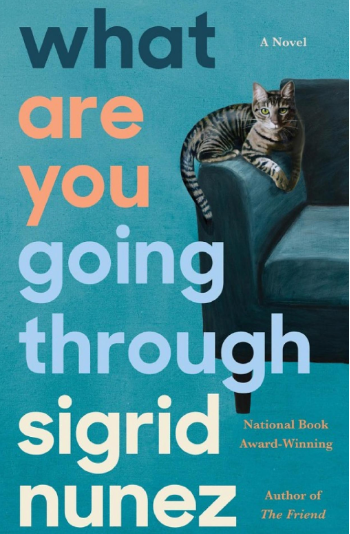
Sigrid Nunez’ novel, What You Are Going Through, develops a new theme in the ongoing debate about the ethics of euthanasia and assisted suicide. Traditionally, that debate has focused on two parties – the person who is making the decision to take her own life and the physician who may be asked to assist. That dual focus informed Katie Engelhardt’s insightful book, The Inevitable, in which she, as a reporter, tells the stories of four patients and two doctors who each make decisions about whether and how to provide medical-aid-in-dying.
Nunez has a different focus. In her novel, a woman who has untreatable cancer has decided to take her own life. She has obtained the necessary pills. She has planned the circumstances of her own death. Then she asks a friend, the first-person narrator of the novel, to be with her at the end. Her request is quite specific. It is not to assist in the suicide itself. Instead, she says: “What I need is someone to be there with me. I’ll want some solitude of course, it’s what I’m used to after all, what I’ve always craved. But I can’t be completely alone. What if something goes wrong? What if everything goes wrong? I need to know there’s someone in the next room.”
The book explores what that means for each of them. Their interactions lead to discussions and activities that give nuance to the rigid moral categories that often define the debate, ideas like patient autonomy, intractable suffering, or the specific criteria that determine who may legally be allowed to ask a physician’s assistance in ending their own life. In Nunez’ novel, the woman is terminally ill but not in pain. In fact, much of the book is about going out for drinks, going grocery shopping, watching movies, and doing the laundry.
The narrator wonders why she has been chosen. The unnamed woman-who-wants-to-die has a daughter but they have long been estranged and the woman doesn’t want to ask her. She admits that she had previously asked her closest friends, but they all said no, claiming that they could not possibly watch her die without intervening. So, she needed someone who was close enough to be willing but distant enough to be complicit.
The dying woman talks of the difficulty of getting people to understand and accept the fact that she is dying. Most people, she says, simply will not accept the fact that she is dying or her decision to forgo further medical treatment. She says, “People don’t want to hear terminal, she says. They don’t want to hear incurable, or inoperable. They call that defeatist talk. They say insane things like As long as you stay alive, there’s a chance. And Medical miracles happen every day. Not that they all really believe what they are saying but they obviously believe it’s what they should say.”
In this, she mirrors the sentiments of theologian and pastor Kate Bowler who has written about her own experience with metastatic cancer. Bowler’s area of scholarship is the “prosperity gospel,” that uniquely American, that is to say individualistic and meritocratic, strain of Christianity that sees worldly riches as a sign of God’s favor. Those who die young are thought to have lacked faith, since if they’d had faith, they wouldn’t have died young. It is a punishing world in which even the very ill are not allowed to give up. “A daughter asks her elderly mother to put on her lipstick and smile before seeing the doctor. A man wants to call it quits on his painful gauntlet of medical treatments, but he cannot bear the disappointment of his family.” To believers in the prosperity gospel, surrender sounds like defeat and the need to keep hoping and believing that everything happens for a reason becomes a pervasive and oppressive lie.
Nunez writes a lot about little lies – lies of omission and commission, lies that she tells to her friend and little lies that the narrator offers the reader, holding back relevant information and sometimes circling back to an earlier half-truth and clarifying in a way that makes us wonder what else she has held back.
Others have written about the difficulty of talking in truths to loved ones who are dying. Philip Roth, in his memoir about caring for his dying father, describes in detail two conversations in which he, Philip, was unable to tell his Dad the truth. In the first, he has been told that his Dad’s MRI shows “a massive tumor.” He needs to get his Dad to a neurosurgeon. He writes, “I managed to get my father to the neurosurgeon without telling him what the MRI had already disclosed. I lied and said that the tests showed nothing” but that the trip to the neurosurgeon was just extra caution. In the second dissembling conversation, Philip wants to get his Dad to sign an advanced directive. But when he goes to discuss it, he cannot. They end up talking, instead, about famous Jewish boxers and baseball scores. He cannot bring himself to force his father “to face the most bitter of all possibilities.”
Nunez adds to what we know about aid-in-dying. There is nothing special about the physicians’ moral dilemmas. Friends and family members face the same dilemmas. To imagine a good death, one must imagine that death can sometimes be good. Dylan Thomas imagined that his father might be going “into that good night” but, as Nunez points out, “the one person with whom the poet could not share his poem was the very one who had inspired it, and who is addressed in it, the reason being that Dylan Thomas’s father hadn’t been told that he was dying.”
The title of the book comes from Simone Weil. Weil said that being able to ask of someone, “What are you going through” and to stay and listen to the response was what love of one’s neighbor truly meant. Such listening work can rarely be done by health professionals. Instead, friends and loved ones must meet the challenge. Nunez’ pioneering work helps us begin to understand what it will mean to meet that challenge.
Related writing.
Why the Dutch Keep Pediatric Euthanasia Illegal
Pediatric euthanasia in The Netherlands has a unique legal status - it is illegal, openly practiced, and well-regulated. The most surprising part isn't the law that enabled this — it's what happened after.
The Lost Aura of the Doctor in the Age of AI
	Artificial intelligence can now make difficult diagnoses, detect drug interactions, read medical images, predict outcomes, counsel patients — and even write peer reviews. As these capabilities expand, doctors risk becoming supervisors
The Tiniest Patients: Rethinking How We Decide
	When a baby is born at 22 or 23 weeks of pregnancy — half the normal gestational period — doctors and parents face one of the most agonizing decisions in all of medicine. Should they fight to keep the baby alive, knowing survival is u
Emilia Perez: New Life or New Gender?
The award-winning film Emilia Perez addresses a central question in gender medicine. When a patient wants to transition, is it because they want to change their gender or because they want to change their life? If the later, a gender trans
About the author
John D. Lantos is a pediatrician and bioethicist writing on AI in medicine, neonatal intensive care, and end-of-life decisions. His essays appear in JAMA, JAMA Pediatrics, the Hastings Center Report, the New England Journal of Medicine, and Aeon. Read more about John.