From the blog
The Pope and Perinatal Palliative Care
We were excited to hear the Pope. (https://pubmed.ncbi.nlm.nih.gov/30097527/_ We followed the colorfully clad Swiss Guards through a maze of hallways, stairways and courtyards to ornate hall. The Pontiff's speech would wrap up the two-da
Updated: Apr 22, 2022
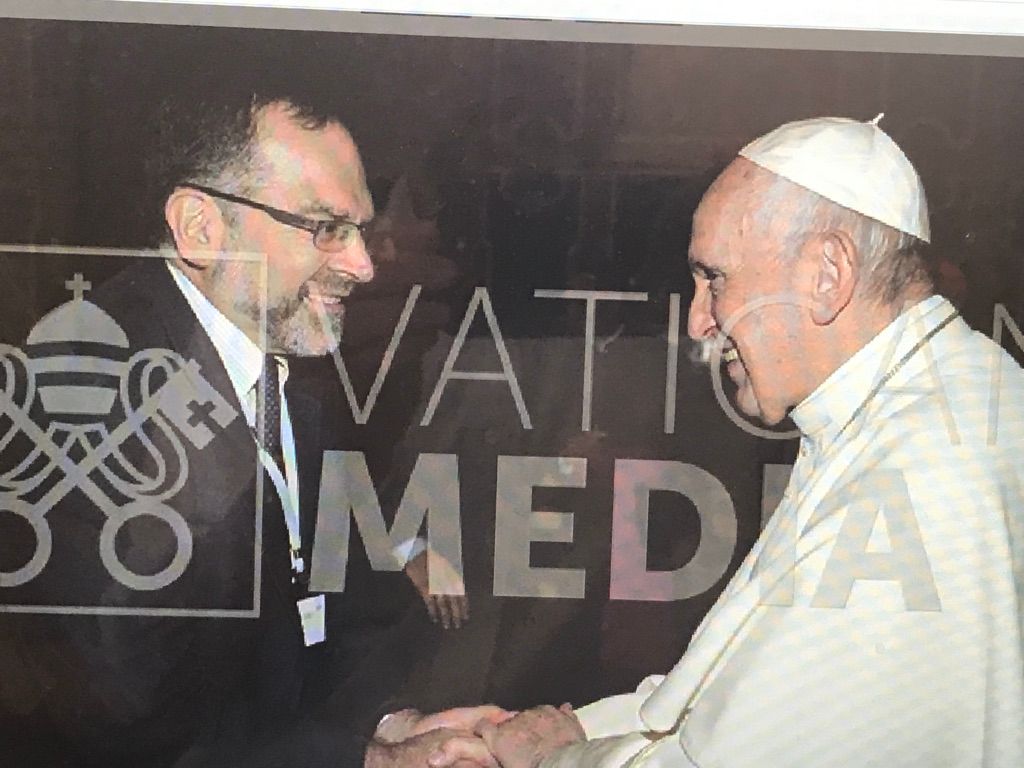
We were excited to hear the Pope. (https://pubmed.ncbi.nlm.nih.gov/30097527/_ We followed the colorfully clad Swiss Guards through a maze of hallways, stairways and courtyards to ornate hall. The Pontiff's speech would wrap up the two-day Vatican-sponsored conference on perinatal palliative care.
At the opening dinner, we heard some of the conference organizers talk about the five years of careful planning and internal politicking that led to this remarkable meeting. The meeting led to a careful compromise between affirmation of the sanctity of life and acceptance of the face that some babies are born with conditions in which survival is unlikely. The Pope had to grapple with advances in fetal medicine that allowed in utero diagnosis and treatment.
(https://pubmed.ncbi.nlm.nih.gov/33416625/)
The situations in which perinatal palliative care is considered are every parents' nightmare. An abnormal ultrasound. A referral to a tertiary care center. More studies. Bleak news. And an agonizing decision - terminate the pregnancy or hope for a live birth, a brief life, and a comfortable and meaningful death. (https://pubmed.ncbi.nlm.nih.gov/30948683/)
The excitement mounted as we waited for the Pontiff. The thrill was electric as the massive doors opened and he entered the hall, surrounded by a retinue of aides, photographers, and security guards. He looked frail, perhaps made even smaller by the ritual surrounding him. He almost seemed to be a precious artifact, taken from room to room.
He gained strength as he spoke.
He began: "No human being can ever be unfit for life, whether due to age, state of health or quality of existence. Every child who appears in a woman’s womb is a gift that changes a family’s history, the life of fathers and mothers, grandparents and of brothers and sisters. That child needs to be welcomed, loved and nurtured. Always!" (https://muse.jhu.edu/article/765999) He described palliative care as an effort that “seeks to bring the love of a family to fulfillment” and “helps parents to process their mourning and to understand it not only as loss, but also as a stage in a journey travelled together.” He spoke of how even a few hours together with a living but dying baby could leave a deep trace in the hearts of family members.
The remarkable event built a bridge between medicine and religion. The relationship between the two domains has not always been friendly. (https://pubmed.ncbi.nlm.nih.gov/17287479/). But they need each other for each to be all that it can be.
Related writing.
Why the Dutch Keep Pediatric Euthanasia Illegal
Pediatric euthanasia in The Netherlands has a unique legal status - it is illegal, openly practiced, and well-regulated. The most surprising part isn't the law that enabled this — it's what happened after.
The Lost Aura of the Doctor in the Age of AI
	Artificial intelligence can now make difficult diagnoses, detect drug interactions, read medical images, predict outcomes, counsel patients — and even write peer reviews. As these capabilities expand, doctors risk becoming supervisors
The Tiniest Patients: Rethinking How We Decide
	When a baby is born at 22 or 23 weeks of pregnancy — half the normal gestational period — doctors and parents face one of the most agonizing decisions in all of medicine. Should they fight to keep the baby alive, knowing survival is u
Emilia Perez: New Life or New Gender?
The award-winning film Emilia Perez addresses a central question in gender medicine. When a patient wants to transition, is it because they want to change their gender or because they want to change their life? If the later, a gender trans
About the author
John D. Lantos is a pediatrician and bioethicist writing on AI in medicine, neonatal intensive care, and end-of-life decisions. His essays appear in JAMA, JAMA Pediatrics, the Hastings Center Report, the New England Journal of Medicine, and Aeon. Read more about John.