From the blog
The Scribe, the Screener, the Advisor, and the Companion
AI is changing the way we do clinical work in general pediatrics. In a new essay, I analyze four important changes to which we will have to adapt.
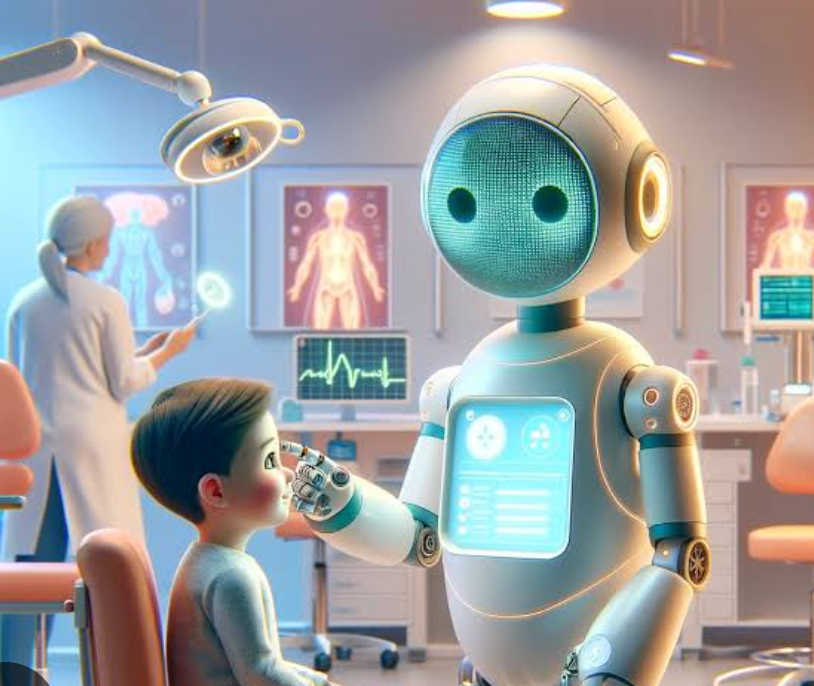
Artificial intelligence is not replacing pediatricians and it isn't creating chaos. Instead, it is creeping into our professional lives, one small and necessary task at a time. A machine can now listen to each patient visit and draft a note summarizing the interaction. Algorithms can score parent-generated answers to questionnaires about developmental issues. Chatbots can respond, immediately, to parents’ questions about their child. Apps can befriend, counsel, and sometimes comfort lonely teens.
Many reviews of AI in pediatrics are organized by discussions of the capabilities of the technology: machine learning here, large language models there, computer analysis of visual images or test results somewhere else. That approach reflects the concerns of engineers and, in many cases, of specific subspecialists like cardiologists or radiologists. But that focused approach can also obscure what matters most to the primary care clinician. In a new essay in Current Problems in Pediatric and Adolescent Health Care, I take a different approach. I organize the field around four roles that AI is coming to play in general pediatrics, and ask what each one tells us about the strengths and weaknesses of both the machines and of human pediatricians.
The scribe: what is lost when the notes get better?
The most widespread use of AI in pediatric practice is the least glamorous: ambient documentation. Tools like Abridge, DAX Copilot, and Nabla listen to the visit and draft the note. Pediatric encounters are more complex than clinical encounters with adult patients. The exam room is acoustically chaotic. A sibling may be melting down, a grandmother could chime in, and the chief complaint may come from a child, a parent, or a grandparent. A mechanical scribe would have to make sense of the cacophony. For adolescents, parts of the visit will be highly confidential. A complete, discoverable recording could be undermine trust and make quality care difficult.
There is a subtler problem. One study found that AI-scribed visits documented significantly more neuropsychiatric symptoms than unscribed ones. The machine, unlike the judicious clinician, writes down everything. As the note gets more detailed, it may also become more noise than signal. We may end up with an exquisitely detailed medical record of problems that the clinician considered but then decided not to prioritize.
The screener: who delivers the diagnosis?
General pediatrics is, at its core, a screening practice. The periodicity schedule is a screening protocol. Unsurprisingly, the first FDA-authorized AI diagnostic tools in primary care pediatrics were screening tools, most notably Canvas Dx, which helps primary care clinicians diagnose or rule out autism. There is a strong case for using these tools. There is a dire shortage of specialists in developmental pediatrics. The wait for a specialty autism evaluation often exceeds a year. That waitlist is an ethical catastrophe that widens disparities, because affluent families can buy private evaluations while poor families wait.
But autism is not strep throat. It is an identity-shaping, family-reorganizing diagnosis. The specialist evaluation was never about making a diagnosis. It was also counseling and initiation into a new world of services and meanings. The danger is not only that the algorithm could be wrong. It is that it will be right as far as it goes, but not go far enough. Instead of replacing doctors, it may create new demands for time and expertise that primary care pediatricians don't have. Other screening tools may have similar problems. Predictive tools for child maltreatment may be trained on datasets that incorporate biases about class and race and may lead to exacerbation of these biases.
The advisor: what is the pediatrician for?
Parents are asking chatbots the questions that once went to the nurse line or the after-hours service. Studies suggest that chatbots’ answers to such questions are not only clinically astute but are also perceived as more empathic than the responses of doctors. AI will be another step along a path that we’ve been traveling for a while by which pediatricians, as well as other clinicians, will have lost their professional monopoly on important clinical information The trend is decades old. Parenting guides and then the internet each took a piece. But the chatbot is different. It is not a fixed publication. It does not just return a list of links to existing sources. Instead, it carries on a conversation in which parents can ask follow-up questions, clarify ambiguities, and test their own intuitions. AI is fluent and confident, whether or not it is right.
So what unique skills and value do pediatricians bring today? The glib answer is that we bring empathy and the human touch. That is exactly backwards; the machines simulate empathy rather well. The better answer is we take responsibility for our judgments and recommendations. We are there to measure the algorithm's output against how the child looks, how the parents feel, and to weigh the benefits and burdens of different treatment choices.
The practices that thrive will be the ones that stop pretending parents aren't using these tools, and stop disparaging them when they do. We should ask families what the chatbot told them with the same nonjudgmental curiosity we learned to bring to Dr. Google. As Ethan Mollick notes in his new book, Co-existence, “Experienced professionals become more valuable than ever because their judgment is what makes AI useful.”
The companion: screen time 2.0
The fourth role inverts the other three. Here AI is not a tool of pediatric practice but a feature of our patients' lives. Teenagers have adopted conversational AI faster than anyone. Many use companion apps designed to simulate friendship, romance, or therapy. Some of this is benign: a socially anxious fourteen-year-old rehearsing a hard conversation, or a rural teen with no therapist finding something better than nothing. But it can be dangerous. A Florida teenager committed suicide after an intense attachment to a Character.ai companion. We don’t yet know why. But we know that these products are built to maximize engagement. Anyone who watched social media's first decade should find that familiar.
We don't yet have an evidence base for what to tell families. The responsible posture, today, is structured curiosity. We have to start asking teens what they use, how much, and how they feel afterward. We should ask whether it affects what they eat, how they sleep, or the impact it has on friendships. We should watch for red flags: secrecy, displacement of human relationships, and romantic or therapeutic dependence on a system optimized to be agreeable. Pediatricians spent a decade behind the curve on social media. We have a chance to be only a few years behind on AI.
Why pediatrics is always last
Beneath all four roles lie structural facts that keep pediatric AI downstream of adult medicine. Children are underrepresented in training data, and a child's baseline is a moving target. Privacy stakes are longer: a breach or a biased risk score follows a five-year-old for eighty years, and unlike the adult, the child never knew the risks.
The economics cut both ways. Pediatrics is the lowest-margin field in American medicine, so we get AI as a hand-me-down. Yet children themselves are a lucrative and vulnerable market, and AI-driven targeting will be precise and powerful. We need to advocate for the kind of regulation that once kept certain content away from kids on television.
The newest protocol
General pediatrics has been here before. Every major improvement in child health over the past half century, from neonatal resuscitation protocols and immunization schedules to asthma action plans and bronchiolitis guidelines, came from standardization: from deliberately constraining individual judgment in favor of impersonal, population-based systems. AI is the most powerful standardizing technology medicine has ever encountered. It will likely read the eardrum more accurately, screen for autism more equitably, and answer the 2 a.m. question more patiently than any of us.
The challenge is to be open-minded enough to use it well and skeptical enough to reject it when it overreaches. There is nothing sacred about note-writing or triage. If AI frees the doctor to be there when a frightened family and a sick child need someone who understands their fears, someone who can examine the child, weigh the evidence, and take responsibility for what happens next, then general pediatrics may be heading into a new golden age.
Lantos JD. Artificial intelligence in general pediatrics: the scribe, the screener, the advisor, and the companion. Curr Probl Pediatr Adolesc Health Care. In press. doi:10.1016/j.cppeds.2026.102010.
Watch related
Hear the ideas in conversation.
 Listen · 2026 Annual Meeting · 39 minAI in Medicine: Colorado Medical SocietyJohn Lantos speaks at the Colorado Medical Society annual meeting in Vail about artificial intelligence, medical judgment, empathy, and the changing relationship between doctors and patients.
 Listen · The Nocturnists · 59 minThe Lost Aura with John Lantos, MDJohn Lantos joins Emily Silverman on The Nocturnists to discuss the history of the doctor-patient relationship, the physician's changing role, and what artificial intelligence means for the human work of medicine.
Related writing.
AI and Chariots of Fire
A century ago, Cambridge was scandalized that a sprinter hired a coach. The panic over AI as a writing coach rhymes with it — and will age just as badly.
Why the Dutch Keep Pediatric Euthanasia Illegal
Pediatric euthanasia in The Netherlands has a unique legal status - it is illegal, openly practiced, and well-regulated. The most surprising part isn't the law that enabled this — it's what happened after.
Humans for technique, chatbots for understanding
I recently had an opportunity to present my thoughts on medical AI at a scholarly conference hosted by Oxford University. I started with a situation that I faced as a patient. After my doctor noticed some irregular heartbeats, I wore a moni
The Lost Aura of the Doctor in the Age of AI
	Artificial intelligence can now make difficult diagnoses, detect drug interactions, read medical images, predict outcomes, counsel patients — and even write peer reviews. As these capabilities expand, doctors risk becoming supervisors
About the author
John D. Lantos is a pediatrician and bioethicist writing on AI in medicine, neonatal intensive care, and end-of-life decisions. His essays appear in JAMA, JAMA Pediatrics, the Hastings Center Report, the New England Journal of Medicine, and Aeon. Read more about John.