ELSI-LHS Symposium: Ethics Session
November 23, 2016 · Tevah Platt · 1 hr 30 min
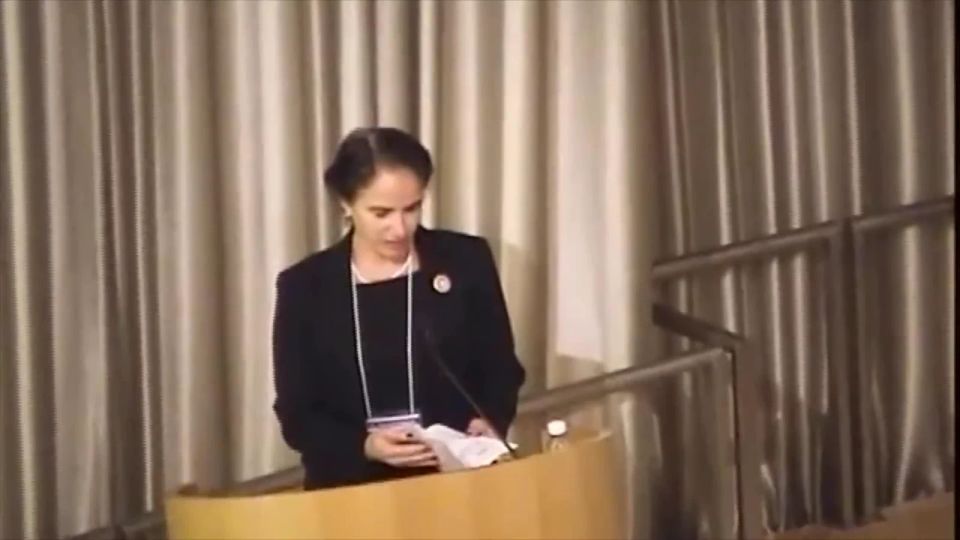
About this recording
An archived video recording featuring John D. Lantos from Tevah Platt.
- Format
- Video recording · 1 hr 30 min
- Recorded or aired
- November 23, 2016
- Institution or outlet
- YouTube / Tevah Platt
- Archive identifier
- V034
- Speakers
- Pat Rinvelt, Anne Dillon, John Birch, Jodyn Platt
Transcript
103 passages
- 00:09
Jodyn Platt
Okay. Good morning. Hi.
- 00:14
Jodyn Platt
So I'm Jody Platt. I'm an assistant professor in the Department of Learning Health Sciences here at the University of Michigan. Could I get a
- 00:21
Brief room and presentation-transition fragments
program?
- 00:29
Jodyn Platt
I am very excited to be here this morning. I'm very excited that you're all here this morning. We're going to talk about the ethical, legal, and social implications of learning health systems. And I'm just, I'm basically here just to say welcome.
- 00:45
Jodyn Platt
And to talk a little bit about why it is that we're here. Many of you would have received somewhere along the line in sort of registering and getting ready for today, a 39 second request to let us know why you're here. You wouldn't have all got it because some of you registered after that, but we were trying to get a sense of why it is that you're here and to try to address some of those with the panel of speakers that we have here today. It was very exciting for me to be able to watch the registration goes up. I think we have about 228 people registered right now. So there's a lot of enthusiasm behind this topic and I'm hoping that we can sort of take that and begin to harness it into what might be a set of research questions for learning health systems that they can use as we're building a learning health system. I'm here because I study trust and trust in health information systems. And I can't do that without understanding the ethical, legal, and social implications of those systems. So that's why I'm here.
- 01:45
Jodyn Platt
Many of you are here to learn about what learning health systems are. It's still a new concept. It's still under development. Many of you are here to learn about what the ethical, legal, and social implications of those learning health systems are.
- 02:01
Jodyn Platt
an awesome lineup of speakers. That's your words and mine, but the quote is an actual quote. And then also you're here to network and talk to other people.
- 02:14
Jodyn Platt
Just to sort of give a little bit of a baseline of what a learning health system is, this is the 2011 Institute of Medicine definition of learning health systems are to generate new knowledge as an ongoing natural byproduct of the care experience. and seamlessly refine and deliver best practices for continuous improvement in health and healthcare. In many respects, learning health systems are a vision for data and analytics in healthcare to sort of speed up the translation pipeline, to speed up quality improvement, and to make health and healthcare better in the local clinical setting, but also for states, for nations, for the world. As a point of departure, I would encourage you all to recognize that you actually know a lot more about learning health systems and the ethical, legal, and social implications of them than you might think. So many of you are clinicians, you're public health practitioners, you do quality improvement, you do precision medicine, big data, health IT, and all of these are sort of good sort of experience bases for what it is that the learning health system is striving to do.
- 03:28
Jodyn Platt
One of the things that I find most interesting about sort of learning health systems is that it forces us to sort of re-examine some of these questions, not from the lens of quality improvement or research or public health, but we actually are trying to see if the purpose of collecting data is to learn, it throws off a lot of the existing frameworks that we have. And that I find interesting. And for the time being, we're sort of punting on many of these questions, which is sort of okay for a little while, but ideally you end up with sort of better field position overall, and so that's my football knowledge. I'd like to thank, so our speakers really are awesome, and I'm excited that they're all here and to hear what they have to say. I'd also like to thank our sponsors, HIMSS, the Department of Learning Health Sciences, at the University of Michigan, the School of Public Health, the Brum Center, the Michigan Institute for Clinical and Health Research, which we know here affectionately as MISHAR, and the Center for Bioethics and Social Sciences in Medicine, or CBSSM. And then our planning committee, raise your hands. Come on, you know who you are. Yeah, Ray, thank you.
- 04:46
Jodyn Platt
They're a fabulous group of people. Mary Wines who you would have met when you registered and Teva Platt who is in charge of communications for this event also sort of stand out as pretty spectacular contributors. Hopefully you will have all gotten buttons and this is a metaphor that we've used frequently here at the in the department for to describe sort of what's being done in the learning health system space. And a lot of what that work involves is people bringing their shelves, their pin backs, their mylars, and then people building the machine that enables you to sort of press it and come out with something better. So that's sort of a little bit of background on the buttons. Just quickly in terms of networking, go ahead and say hello to people. You know people across the room. So let's go ahead and start doing that right now. Stay for lunch. I encourage everybody to stretch. So we are sort of a diverse group of people, of people who are mostly in practice, mostly in research. There are people who are literally sitting there doing computer programming.
- 05:54
Jodyn Platt
And we have ethicists and people in social science. And we can create some pretty interesting, I think, research teams to answer the questions that we have here today. And then get involved and come again, and we'll sort of keep talking about that all day. And then finally, share your thoughts. We do have note takers. We are recording the event. We have an evaluation form that we hope you'll sort of actually complete and give back to us. If you are taking notes on your computer, send them, just email them to us. We'd love to see what you've had to say. And then we're also on Facebook and Twitter. And now Raymond DeVries.
- 06:37
Raymond De Vries
Good morning again, and I want to add my welcome from the Center for Bioethics and Social Science and Medicine. We're really delighted to see you all here today. And I thought it would be interesting, as I was preparing for today, I happened to notice, I also work in the Netherlands, that as we are sitting here today in Ann Arbor, in Utrecht actually, a conference is going on right now on personalized medicine, and you guys can all read Dutch, it's great, and the role of big data. boundless or endless possibilities. So it's interesting to me that we're kind of capturing a moment. It's not just a moment here, but it's a moment across the globe where people are starting to think about these issues. Although I think we have something special going on here, because we are considering the ethical, legal, and social implications. So just a little bit about the day. I just want to set up the day and get us kind of in a mindset to think about what we're going to do today. This is in your program, but I want you to especially appreciate how hard we worked to do the alliteration.
- 07:32
Raymond De Vries
We couldn't quite figure that out for session four. So we'll be talking about ethics, engagement, equity, and law and policy in these issues. And really our goal here is just to start a conversation. Although I think a lot of you might know that the conversation more or less began with the publication of this special supplement to the Hastings Center report where Ruth Faden and her colleagues put together a few articles on the ethics framework for thinking about learning health systems. And they just very briefly, I'm guessing a lot of you haven't read this, They set up this framework and they start with this assumption that clinical research and clinical practice are not ethically fundamentally different enterprises. They also go on in this particular collection of articles to bring together the arguments that morally justify the transformation to a learning health system. What I want to say is today we're going to explore these assumptions a little bit, maybe walk some of them back and actually go a little deeper into these things. So really we're talking about creating an LC of learning health systems 2.0, if you consider Faden et al. as 1.0. And really what they did, and I don't want to give you all the details, but they came up with seven obligations of a learning health system. And that's sort of talking about what's the interior workings, what are the ethical obligations within the learning health system. But we're going to expand that a little bit today by looking in LC 2.0 as what about the inputs to a learning health system? the data come from that informs the learning health system. And there are clearly ethical questions there. What are the effects of an electronic health record? How does that influence the relationship between caregivers and patients? Also, when you create a health record, how do you import unreflectively the norms and notions of your society? Also worth thinking about. And then on the other side, we're also interested in outputs. And just as one example, there was a recent paper by O'Dardy and his colleagues that talked about the fact that, yeah, the data we're collecting is very useful for thinking about medical problems, but it can be used in other ways. Some of those ways are benign, like helping identify victims in mass casualty events, but some are not so benign if you look down that list. Denial of entry at the borders. I mean, when we have these data about people, there can be effects that we need to think about, and this is outside of the framework of the learning health system. So you guys are all lucky enough to be here to watch this move from LC 1.0 to LC 2.0. And you're participating in it. We really want to hear from you and get your reflections.
- 10:04
Raymond De Vries
Now, we folks who work in medical ethics, when we think about the problems of medical systems and health systems, we draw on a lot of disciplines. So we draw on law. We draw on medicine, social work, social science, philosophy, and literature. And as we start today, I just want to share with you a short poem by the poet Rainer Maria Rilke, and it's a little meditation to get our heads in this space about the relationship between human beings and the things they create, be those machines, be those objects, or be those systems. Orpheus, do you hear the new sound droning and roaring? Many now exult in it. Though the machine insists on our praise, who can listen with all this noise? See, it rolls over everything, weakening us, and taking our place. Since its strength is of our making, why can't it serve and not possess us?
- 11:03
Raymond De Vries
Food for thought as we move through the day. And now I'd like to introduce our first panel. The moderator of that panel will be my colleague, Dr. Andy Schuman, assistant professor of otolaryngology and co-director of our clinical ethics program. So help me welcome Andy and first panel.
- 11:23
Andrew Shuman
Good morning. It's truly a privilege and a pleasure to be here. I have the honor of introducing the first session today, which is very blandly entitled Ethics, but I think that really is the most important way to start a foundational discussion of what the purpose and practice of a learning health system is. Clearly, the goal of a learning health system is to advance knowledge, to educate, and to promote health. However, I would challenge us to think about what does it actually mean to improve knowledge or to improve public health and how do we do so in a manner that is scientifically rigorous, academically important, but also ethically and morally sound. The panel and the speakers for this morning's session, any one of whom truly could lead a keynote plenary session at any meeting and For that reason, we really are privileged. The only downside of this session is we are giving giants in our field only 15 minutes to share their wisdom. My goal will be to present and introduce these four individuals to you briefly. I will ask each of them to give a 15-minute presentation. And after that, we will reconvene for a roundtable discussion, as well as solicit and try to address the comments and questions that you present. The first speaker for this session is Dr. Scott Kim. He's no stranger to our group and, in fact, is a loyal friend and colleague of ours. Dr. Kim is currently a senior investigator at the National Institute of Health in the Department of Bioethics. He was previously a professor of psychiatry at the University of Michigan and still holds that role in adjunct form and also was the director of the Center for Bioethics and Social Sciences in Medicine and one of the founding members of that institution. His background is in psychiatry. His training is at Harvard and elsewhere. And he also has a PhD in moral philosophy.
- 13:26
Andrew Shuman
Welcome to Dr. Kim in a minute. The second speaker is Dr. John Lantos. Dr. Lantos is a professor of pediatrics and truly one of the giants in the field of pediatric ethics across the world. He is thoughtful, he is inquisitive, and he is always willing to make us think a little harder about what positions we've held. Currently, he has the pleasure of being the founding director of the Children's Mercy Bioethics Center in Kansas City, and was previously at the McLean Center in Chicago. He's a past president of ASBH and has the privilege of welcoming ASBH's national meeting to his backyard next year. Dr. Jeffrey Botkin is our third speaker. He is a professor of pediatrics and an adjunct professor of human genetics at the University of Utah. Our connections at Michigan to Utah have grown in the past year. And Dr. Botkin also has the honor of serving in a research integrity role as well as the chief of the Division of Medical Ethics and Humanities. He's also served in senior leadership roles in the government entities that are related to the exact topics that we'll be discussing today. And finally, our discussant is one of our own, Dr. Peter Jacobson. Professor Jacobson is our colleague. He's a professor in the health law and policy venue here and also the director of the Center for Law Ethics and Health. He is similarly a giant in the field, is the associate editor Health Law and Public Health at the Journal of Health Politics, Policy, and Law. And he will be joining us for the discussion. So without further ado, it's my privilege to welcome Dr. Kim. Thank you.
- 15:12
Dr. Scott Kim
Thank you, Andy, and thanks for inviting me. It's really nice to be back home. I like to say that even though I've left Ann Arbor, I'm still a very loyal Wolverines fan because my younger son won't let me forget that. So we're pretty obsessed about following and saying go blue every Saturday. All right, so what do I do here?
- 15:39
Dr. Scott Kim
Somebody, is that mine? It is or it isn't? No. Well, I'll tell you a joke. No. No, I'm actually very, honored to be on the same stage with John and Jeff and other distinguished speakers. You've all been disclaimed and my conflicts have been disclosed, so we can move to the next one. How do I do this? This
- 16:07
Brief room and presentation-transition fragments
way?
- 16:08
Dr. Scott Kim
Okay.
- 16:11
Dr. Scott Kim
Okay. So what I'm going to do today is to talk about one portion of what in this discussion of learning health care systems, which is not just what we commonly think about, which is big data. And when we hear big data, we think about more observational use of data. But we in medicine, obviously, we really like randomized trials. Randomization is like magic. It does all sorts of things. The person who does it doesn't have to be particularly smart. But if you do it, it gives you really, really great results. So it's like discovery of fire or whatever. It's one of these major achievements in human intellectual history I would say. So we still want to use that even in a learning healthcare system in prospective clinical trials. And the idea is to do it within a pragmatic trial and I'm going to talk about that. So what I will do is quickly talk about why it's important to do that. and the kind of ethical tension it raises. I will lay out the options of resolving that tension and then speak very briefly about how would you do that. So I'm going to give you the possible solutions first and then or results and then talk about how one might get there.
- 17:35
Dr. Scott Kim
So I'm not going to spend a whole lot of time on this because the emphasis on the pragmatic ideal is so prevalent within I guess modern medical culture in the states that we, you know, it's not good enough to have drugs that we tested in a small group of people. And we think it'll work in people who are 80 with diabetes and hypertension, but we've never tested it, but we're going to do that. So we want to be able to avoid those kind of questions by testing it broadly in a very realistic way. And the, you can summarize it by saying that we want to do research that closely mimics the usual clinical operations so that your answers can be very useful to policymakers as well as clinicians. And, of course, this goes with the kind of thing that those articles that Ray mentioned. Some people feel that by doing this, well, you know, maybe we have to worry less about this distinction between research and clinical care, the ethical obligations of each. I happen to think that, There is something to it, but we don't want to go too far thinking that way. So
- 18:47
Dr. Scott Kim
these trials are very important because we have many treatments in medicine and procedures that are A or B, let's call them A and B. They're both pretty good. There could be more than two. Not know which is actually better and it's reflected in the variations in practice and lack of consensus in the field. And these are very valuable clinical trials to do You know, when I wrote this, B is new and it's 100 times more expensive. That was kind of meant to be a real exaggeration, but you all know that's not an exaggeration, right? It could be even more than that these days. One of the treatments could be very burdensome, but it could be also more effective. We don't have great data, but that's a suggestion. One might have all the rigorous data, but a clever company has marketed much better A very similar drug, so it's convinced the doctors that it's kind of the same thing. So people use that more than the drug that's actually used in clinical trials that happens. And then this applies to procedures, surgical and otherwise. And
- 19:56
Dr. Scott Kim
there are many instances in medicine where still we do things because we've always done it and, you know, like in the 60s there was that one old study that showed that and then we kept on doing it, kept on doing it. They're having some new studies, but we're not sure. We really haven't done a rigorous head-to-head trial. So it would be wonderful to know this. And of course, from a policymaker's point of view, you can save lots of money if you really know which is better and you do that first. Okay, so what's the problem? That all sounds terrific, right? And you can see why in a learning health system of the future, I'd say, if you can integrate the research and the clinical procedures, you could really come up with very usable data. Now the problem is that the vision of this system
- 20:47
Dr. Scott Kim
and you know if I were designing a place where I could do these randomized trials you would want to build into the very framework of the system so you have a program of series of trials not just one off because you have hopefully have set up a wonderful electronic health record system so that you really only have to use that for a lot of these outcomes. However, the problem is that if you use required to obtain traditional informed consent with those 10, 20 page forms, you have to sit down and have a conversation. It's really, it's not really conceivable how you could integrate that into the everyday clinic. You know, when I talk to my wife and go, you know, couldn't you just take five minutes? She's a primary care pediatrician. So I said, you know, couldn't you do research? Just take five minutes and talk about the research study. And she thinks, like, what are you talking about? It's like we're seeing 30 patients a day. It's like, you know, it's chaos. I mean, how are you going to do these kind of consents? So that's one of the most commonly talked about. That's what I'm going to address today. All right. So here's this intuition though, maybe standard of care RCTs. And I want to say at the outset, I'm using standard of care RCTs as my shorthand. Other people might want to call them RCTs of accepted treatments, whatever. So let's just, I don't want to get into a whole debate about whether it's the right terminology. All right. But it has these features, right? The interventions are accepted, so-called standard of care. You can't blame the doctor for using it. Everyone will receive these treatments whether you're inside the trial or outside the trial, right? What most doctors would say, yeah, that's what you do. And there's no special research measures if we've gotten to the point where the electronic records can really give us good primary outcome data. So, again, there's a strong intuition that the ethics of studies must somehow be different than usual. The question is how different is it, right?
- 22:56
Dr. Scott Kim
Here's the, what I think is a nearly exhaustive list of options that we have. So when we determine whether in a proposed study, it's number one, it is ethically acceptable to forgo or modify traditional informed consent. Let's say that's one option, right? That's what we're, that's the tension we have to, so we go one direction. So if we do that, and after thorough analysis, these are the kind of options we would have. Sub list isn't exhaustive but it gives you a feeling. You could use a shortened form hoping that that will speed up the process and make things adequate enough. You could do a simplified opt out. This is kind of specified in the recent European directive, the regulations for clinical trials in which they do say for certain types of cluster randomized trials, you could do what amounts to an essentially and verbal opt out process. So after you inform them of the elements of informed consent. You could do a verbal consent. This is something that I, shorter verbal consent. This is something I've advocated for certain types of trials where after certain conditions are met, you could do that. And basically the idea is, you know, I'm a psychiatrist. I talk to patients and I go, well, we could try this drug. These are the, this is why I'm doing it. These are the potential side effects. You really don't need to take a lot of time to explain it. And I just documented in the electronic medical records. Or others have advocated, no, no, no, even that takes too much time. We can't do these trials using that. So what we can do is to massively advertise this, hope, you know, trying to create some cultural change. The convention itself gets changed so people accept general notifications and broad consent when they join the learning health system, right? You could do that. Or some people have argued, well, you know, these are, some of these studies are so, benign that you don't even need consent. Now, on the other hand, suppose you say it's not ethically acceptable to forego or modify traditional informed consent. Then what do you do? Well, you have a couple of options there, too. One is you could modify the trial. And maybe you'll be able to modify it to the extent to accommodate informed consent. And it's not what you wanted to do, but it's pragmatic enough. That's possible. In fact, I know that happens. The other option is, well, you know, it's great if we could do it, but if you can't get informed consent, looks like you either can't afford to do this study or the scientific data you gather just isn't going to be worthwhile, so you can't do it. So I believe that this represents nearly exhaustive list of options.
- 25:42
Dr. Scott Kim
But how do you get there? You know, I said after careful ethical review, you could go to those options. What does this careful ethical review consist of? Well, currently we do have for not FDA regulated clinical trials anyway, these criteria called waiver and alteration. I said forgoing or modifying. So waiving or altering the criteria for informed consent. And these actually, I believe, after having thought about this and written a couple papers on it, it's really uncanny. that people who wrote the Belmont Report,
- 26:27
Dr. Scott Kim
it is somewhat dated, no doubt, but it's kind of uncanny how thoughtful that document and the regulations that came out of that period is even for today. We obviously need some tweaking, but fundamentally it really does give us some very good guide and I would say it's the same for these. There are some things that we could debate and hopefully we'll have time to do that about what these, that are required to be fulfilled for waiver alteration. But they consist of these factors. One, the research have to be impracticable unless you waive or alter the informed consent. And for the purposes of this discussion at this point, we're kind of assuming that kind of exists, right? Because I told you there is this tension. It has to be no more than minimal risk. And the waiver alteration doesn't violate rights and welfare of the subjects. And I'm going to skip the last one because that generally speaks to things like deception research. So the question is, let's start from the first one, the bolded one.
- 27:32
Dr. Scott Kim
Is the study minimal risk? Now, some people think that if two standard care treatments are being compared, since everybody gets what the doctors would have recommended, inside or outside, almost by definition that's got to be minimal risk. I disagree with that and I don't think you can really answer the question without doing a case by case analysis. I've actually done a
- 28:00
Dr. Scott Kim
kind of eye glazing, people get very bored when I talk about this, but I refer you to our paper. We've tried to formalize how you would go about assessing the risk of these kind of comparative studies, randomized clinical trials. And there is a very systematic way in which you can go about it. And I think we pretty clearly show that you can't, you have to do these case by case. But let's say intuitively, this is from another paper I wrote with a colleague, in which you can see, just let's take this one, where you're comparing two FDA approved anticoagulants in the emergency treatment of STMI. And the primary outcome is composite of some really serious clinical outcomes like including death. You know, the potential side effects you're evaluating are bleeding, complications. The benefits are reduction in mortality and serious morbidity. And you can see there are several of those. There are surgical procedures and so forth that are being compared. All of these in theory could be considered standard of care treatments that are being compared in the clinical trial. I just want to appeal to you intuitively that, You have to think long and hard about each case rather than saying, oh, they're both standard of care so they've got to be minimal risk.
- 29:22
Dr. Scott Kim
Now, the other criterion is would foregoing or modifying informed consent violate rights and welfare subjects? This is a weird kind of legalistic criterion, isn't it? I've always found this somewhat difficult to interpret and, but,
- 29:42
Dr. Scott Kim
This is true. Rights could be referring to other existing laws or regulations. Maybe these regulations are saying, yeah, you know, you can waive or alter informed consent, but make sure you're not violating something else by doing that. That's a reasonable interpretation. But there is this odd mention of welfare given the previous minimal risk condition, right? So that seems redundant. So I propose that we interpret this to mean something like this, which I think is intuitive. is you have to think about what people are otherwise entitled to in terms of rights and welfare, rights and benefits. So here we come to the issue of reasonable expectations that are key. All right. And my point is that in terms of these reasonable expectations is that The precise reason why we want to do these trials are often because they involve preference sensitive decisions by patients. We don't know which outcome is best, efficacy, but they have different side effects. Those are, I mean, that's what the entire movement about shared decision making is about. So to try to change the consent in that setting would be kind of an odd thing to do. All right. I'm going to skip that. And I'm going to skip my slide on impracticability. It is actually a complicated notion, but it will take me more than 30 seconds. So I'm going to skip that. And I'm going to end by with this final point. And this speaks to what
- 31:14
Dr. Scott Kim
Ray brought up. I do not believe that learning health systems, even though the word learning is much nicer than the word human subject research, It doesn't really erase fully the research treatment distinction and we can have a discussion about that. What it does do is it makes the ethical distinction more challenging to identify. But also, we shouldn't forget this, it pushes the tension to the various, very highest levels of organization because the institution itself now wants to integrate. And there's going to be pressures to erase that distinction between research and clinical. And I think it's important that this gets addressed. It may end up being incredibly beneficial in the end, but we do need to look at that. Thank you.
- 32:18
Brief room and presentation-transition fragments
I'm just switching. Thank
- 32:24
Brief room and presentation-transition fragments
you.
- 32:42
Dr. John Lantos
Don't underestimate yourself.
- 32:47
John Birch
Yeah,
- 32:51
Dr. John Lantos
there we go. Let me start with a trigger warning. This will be a deeply impractical talk. I will argue that our current system of research regulation is outdated and dysfunctional, but also say that researchers have to follow it. So this might cause some moral distress. In some cases that leads people to be hostile to the speaker. Don't do that, I'm just the messenger here. I never know what to call a disclosure these days since I've been accused of conflict of interest for every one of the things on this slide, so now I put them all up there. This is everybody I've gotten money for or given time to.
- 33:34
Dr. John Lantos
So foundational assumptions of current research regulation I think are these. In clinical care doctors know the risks and benefits of treatment. They can and do explain this to their patients in the course of clinical care and then together in a process of shared decision making the patient and doctor decide on the best treatment for that patient in that circumstance. Whereas in research investigators acknowledge that they don't know which treatment is best and to find out they are happy, willing, even eager to sacrifice patient's interest for the sake of the science that allows them to get an answer to an important research question. In other words, clinicians are smart, good communicators, and can be trusted while researchers are heartless, don't care about patients, and thus are in constant need of moral supervision. There's a deep history of this sort of philosophical distrust. It goes back to the 50s, but in its modern version, that would be post-Belmont. Larry Churchill, I think, is one of the first who articulated it. And
- 34:48
Dr. John Lantos
this deep history sees the moral obligations of clinicians and the moral obligations of researchers as being very different. The acknowledged goal of the physician-patient relationship is healing or the health of the patient. The scientific investigator cannot claim this goal or the moral authority that goes with it. Or Brody and Miller, what defines a doctor-patient relationship is the overriding commitment of the physician to that individual patient's benefit. Research participants form a different sort of relationship with the professionals in charge. Failing to see the difference between these two sorts of relationships creates a fundamental problem for protecting patients or subjects. from exploitation. This way of framing the problem is deeply embedded in the DNA of current research regulation so that it doesn't look so much at the risks of particular clinical trials, but it looks at is the risks of being taken care of by somebody whose fundamental moral commitments are not the well-being of the patient. I think this is a narrow and outdated view. It was really a response to the sorts of abuses that got famous in Tuskegee and Willowbrook, which were non-therapeutic studies taking advantage of vulnerable populations in the name of science. And I think this approach to research regulation has been pretty good at curtailing those kinds of research abuses. But it doesn't make sense for most type of clinical research now, particularly the kind of research that we're talking about with learning healthcare systems. Furthermore, nine out of 10 clinical researchers disagree with this view. This is a non-scientific finding. But they say things like, this is Jay Katz, who was one of the strongest advocates for doctor-patient communication and shared decision-making informed consent. Research and therapy, pursuit of knowledge and treatment are not separate but intertwined. Or Keith Barrington, a neonatologist in Canada, I have a fiduciary obligation to provide optimal treatment. I also have a moral obligation to know what optimal treatment is. I also simultaneously have a moral obligation as a researcher to keep trying to find out what the best treatments may be. He doesn't see these as being in conflict but sees them as being thoroughly harmonious and even synergistic. Or this quote from a role in a paper in the New England Journal about 10 years ago, the alternative to clinical research is not individualized and thus better patient care, but merely the pretense of omniscience that physicians do not and cannot possibly have.
- 37:41
Dr. John Lantos
So there are all these different kinds of inquiries that should, I think, lead to different sorts of regulation, but what we do today is try to cram them all into one model of what research is and then apply the sorts of regulation that are appropriate for some small subset of them to all the others. Traditional clinical research assumes that we know what the best is, what the standard of care is, and want to compare it to some new or innovative drug or treatment. Quality improvement assumes that we know what is best and want to figure out how to achieve it. Comparative effectiveness research assumes that we don't know what is best among widely used alternatives and learning healthcare systems I think assume that we're not even sure which questions to ask and therefore how to prospectively gather data instead they, use an ongoing iterative process to try to even figure out where the problems lie.
- 38:44
Dr. John Lantos
So what is research? And this is to compare research and QI. This is from the federal regulations and the key element of research is that it's designed, it's a systematic investigation designed to develop or contribute to generalizable knowledge. Those of you who aren't steeped in the arcana of federal regulations may not know that As long as you promise not to try to learn anything, you can do anything you want and it's not research. You can try innovative treatments. You can try things that haven't been studied before. You just can't
- 39:20
Dr. John Lantos
have a goal of creating generalizable knowledge. What is quality improvement then? Systematic data-guided activities designed to bring about immediate improvements in healthcare delivery in particular settings. and therefore not generalizable and therefore not research. So in a sense, quality improvement is kind of local knowledge. But it's an odd distinction between particular settings and generalizable knowledge since most of us work in particular settings that look a lot like every other particular setting. So that if we do learn something about what improves the quality of care in one setting, were tempted to tell other people about it, at which point it becomes generalizable knowledge, at which point we were doing research without IRB approval and consent. And Bailey wrote, usually the knowledge that results from QI is most applicable to the local situation, but insights about one setting ordinarily have applicability in other setting. I'll skip over comparative effectiveness research quickly, only to say that It is sort of somewhere in between, I think, traditional innovative therapy research, or what do you guys call it? RENT and ROMP? Research on... That's ROMP versus...
- 40:49
Dr. John Lantos
To evaluate new treatments. Comparative effectiveness research has also been called ROMP, and we'll hear more about that later today. So why is there such overlap between all these things? Another key feature of the current system of research regulation is that it was developed before we understood the widespread and now quantified phenomenon of practice variation. Practice variation was, the study of small area practice variation was pioneered by Jack Wenberg and others at Dartmouth and they've now quantified how for almost any procedure you look at, you can find idiosyncratic, inexplicable, and pretty dramatic practice variations. They started doing their studies in small counties in New England, and they found, for example, that children in Littleton, New Hampshire were four times as likely to get tonsillectomies as children in neighboring Burlington, or twice as likely to get chest X-rays in Springfield as in neighboring Townsend. that the number of admissions was highly correlated with the number of acute care beds that were available in any geographic service area rather than any indication of medical need. Now, in thinking about the implications of this for the current system of research, when Wenberg first did these studies, no medical journal would publish them because nobody believed it could be true. So they rejected the papers at the New England Journal at JAMA, and the poor guy had to publish in Science and Nature.
- 42:23
Dr. John Lantos
Now it is so widely accepted that it raises the question, does research, whatever that is, inevitably increase risk compared to standard or individualized care, whatever that is? Or to put it another way, if somebody proposed a randomized trial in New England between a more aggressive or less aggressive approach to tonsillectomy, in which all the children in Littleton and Burlington would be randomized, to either approach, would they be at higher risk than they are now when they're not randomized but instead
- 42:59
Dr. John Lantos
subject to one approach or another based simply on their zip code? If so, if research is more risky, if randomizing them would be more risky, then the extra layer of protection are sensible. But if not, then the extra layers of protection for research are actually deceiving. because they suggest that clinical care is safer and research is riskier than either truly are. And that's a problem for truth telling and that's a problem for the fundamental basis of the way we think about the ethics of research and regulate it. It's based on these two views of what's going on today. Try to summarize and simplify here. One view is doctors know what they're doing and the other is No, they don't. Doctors know what they're doing. This was at the HHS meeting about the support study controversy where
- 43:59
Dr. John Lantos
premature babies were randomized to two levels of oxygen saturation targets. And George Annis, who's a regular writer for the New England Journal of Medicine and thus I think should know better, says, how worried are we about the loss of the physician's individual decision making when nobody really knows what the right answer is? We're really worried about it. A doctor's judgment matters. We have trained them. We think medical education means something. We put them through residency and fellowships. We want their judgment over our own. We value that very highly. They know what they're doing. Or Alice Drager at that same meeting said, It may be the case that individual care is not very evidence-based, but in the cases where you are not in research, your physician is attempting to individualize your care. And as soon as you go into a randomized system, that ceases. On the other side, Keith Barrington says you could call this individualized care, but in reality it's haphazard variation in practice which is due to the lack of good data. Or Norm Faust says, it would not be responsible to give an unstudied treatment to you in an uncontrolled way because neither you nor I nor future patients would ever know whether it helped or hurt.
- 45:11
Dr. John Lantos
So here's the fundamental tension this leaves us with. The ethics of research are such that research is seen as risky and totally optional. Nobody has an obligation to participate in research. Patients are mandatorily protected from participating in research, even if they want to participate, they're not allowed to unless the research goes through the various approval processes which require special permission to do research and then rigorous oversight. Whereas the ethics of quality improvement are that we are obligated to do quality improvement. It's a core competency now of residency training. It's a requirement for maintenance of certification by the American Board of Pediatrics and the American Board of Internal Medicine. And thus patients are obligated to participate in quality improvement projects with no consent, no oversight, and no prior approval by an IRB. But many of the activities that we do as part of research and that we do as part of quality improvement are exactly the same activities. How do you know if you're improving quality if you don't study it? And if you study it, you're doing research. So we may have an ethical obligation to do something that we are ethically and legally prohibited from doing. That is studying outcomes in ordinary practice settings in order to improve quality and save lives. So my view on this is that unstudied treatments have unknown risks and research studies, whatever you call them, to discover and quantify those risks are generally as safe or safer than providing those treatments in an unstudied way that we all have an obligation to do and to participate in those studies and we need a new system of oversight that recognizes that. If you're interested, here are four recent papers that compared the risks to people in studies to the risks of people with similar conditions who were eligible for those studies and not enrolled and showed that being in the studies was generally, had no increased risk. So the key need is to change the culture and develop ethics of learning healthcare systems. Ray mentioned this Fade and Cast paper. The key element of that is that traditional presumptions need to change and that health professionals and organizations have an obligation to learn and patients have an obligation to contribute, participate and otherwise facilitate learning. In some ways, it's the same ethics that we apply to medical education which has many of the same tensions inherent in it. That is, it's an activity done for the benefit of future patients, training new physicians. for which current patients are put at risk, but we consider it obligatory and don't require IRB review or consent. So we're moving towards transparency by engaging patients in research. This approach has been endorsed by the Robert Wood Johnson Foundation, by the Institute of Medicine, and by PCORI. I mean, I think it's coming. It's just coming. Slowly, the next steps I think are new governance systems that thoroughly engage patients or surrogates, parents in all aspects of these activities, whatever you want to call them, including study design, consent, data interpretation, communication of results, dealing with IRBs and federal agencies, looking at adaptive and pragmatic study designs and creative use of big data. I'll finish with a quote that a patient advocate gave at an IOM meeting about this where she said, Look, we want safety. We want seat belts and airbags, but we don't need five seat belts and seven airbags, which is what the current system seems to be. Thanks.
- 49:29
Dr. Jeffrey Botkin
Thank you. Real privilege to be here. And thanks to Jody for all her hard work in putting together this panel this morning. My point I'm going to try to make here in the next 15 minutes or so is going to be relatively simple. So kind of hard to follow John in that regard. But as an academic, I'll take 25 slides to get to a relatively simple point here.
- 49:56
Dr. Jeffrey Botkin
No financial relationships. DISCLOSURE I'M GOING TO MAKE FOR YOU THIS MORNING. SO MY OBJECTIVES ARE SEVERAL FOLD HERE. I WANT TO HIGHLIGHT A COUPLE OF CONTROVERSIES THAT HAVE EMERGED IN RECENT YEARS ABOUT THE SECONDARY USE OF DATA AND BIOSPECIMENS. A LOT OF WHAT I'M GOING TO SPEAK ABOUT EMERGES OUT OF THE BIOSPECIMEN LITERATURE TO A SIGNIFICANT EXTENT. HIGHLIGHT SOME OF THE CHALLENGES EXPERIENCED WITH INFORMED CONSENT FOR RESEARCH AND LEARNING HEALTH CARE SYSTEMS AND THEN TALK ABOUT AT LEAST ONE APPROACH THAT MAY BE APPLICABLE IN CERTAIN CIRCUMSTANCES TO MOVE US FORWARD. General definition, Friedman from this last year that I'm speaking about, familiar I think certainly to this group, harness the power and data analytics to learn from every patient and feed the knowledge into what works best, et cetera.
- 50:46
Dr. Jeffrey Botkin
So I'm not going to talk about a couple of things. So just for clarity purposes, I'm not really going to talk about the background ethical justification for using information that's provided by patients FOR SECONDARY PURPOSES. I THINK, OF COURSE, I DO FEEL THIS IS JUSTIFIED, BUT I THINK IT'S A CAREFUL SET OF ARGUMENTS TO DECIDE EXACTLY WHAT THE LIMITS OF THOSE OBLIGATIONS ARE. I DO THINK THERE ARE DISTINCTIONS BETWEEN RESEARCH AND QA, QI, BUT I REALLY WON'T EMPHASIZE THOSE MUCH TODAY. THE NPRM MADE A SIGNIFICANT DISTINCTION BETWEEN DATA AND BIOSPECIMENS. I'M NOT GOING TO DRAW ON THOSE DISTINCTIONS AT ALL TODAY. And nor am I going to talk about pragmatic trials and those sorts of specific circumstances. I think the broader question I want to speak to is how do we manage legitimate and potential concerns around privacy and confidentiality. I think those are the central risks and concerns that patients and research participants have in these particular domains. And similarly, Given those concerns, how do we maintain trust in the types of systems that we are developing?
- 51:56
Dr. Jeffrey Botkin
So the controversies focus on these secondary uses of data and biospecimens obtained for clinical purposes. So typically no consent is obtained for these secondary uses. And there may be in some circumstances a limited notification that such practices exist. I know in our admission agreement to the University of Utah Hospital, there's a single line, 11-point font that says something to the effect that biospecimens, residual biospecimens will be used in a way that's consistent with state and federal law. Well, that's a meaningless disclosure and certainly doesn't function to support any reasonable ethical obligations on behalf of the institution. Legal liabilities may well be covered by that. I think standard practice for many institutions for many years and what I think we need to be moving away from. As you all are familiar, federal regulations really allow research to be conducted with data and biospecimens without individual consent in many circumstances, either de-identification or even with identifiers, oftentimes the waiver criteria are met. This is a domain of research that I think has been highly
- 53:10
Dr. Jeffrey Botkin
and I also think the track record for risk has been extraordinarily good. There are virtually no instances of significant what I would call welfare harms, tangible harms to participants secondary to data use and biospecimen use, secondary uses in the conduct of research.
- 53:31
Dr. Jeffrey Botkin
So this approach I think has been quite ethically acceptable from the perspective of investigators, IRBs, and those within the academic enterprise. This has seemed to be a fine balance of concepts. But I think the lack of knowledge or consent is not acceptable to many people in the general public. And that's the tension I think we need to be cognizant of here. As mentioned, few welfare harms I think have emerged from this sort of research. But really several high profile circumstances in which individuals I think would claim something like a dignitary harm. Things were used without their knowledge, used in ways that they would find unacceptable. I spend quite a bit of my time these days teaching around the Henrietta Lacks case and book. The Havasupai tribal case, also a fascinating one that's taught us quite a bit about the notion of group harms in certain circumstances. We were in screening lawsuits, I'll mention here in a second, and the Moore case, perhaps a more minor case. These are... circumstances that the public is increasingly aware of. And I know in my teaching enterprise, particularly around the Henrietta Lacks case, folks are a bit shocked to learn what happened to a certain extent, but then shocked to learn that things have changed a bit with respect to the research protections or secondary use protections that were used in the 1950s.
- 55:00
Dr. Jeffrey Botkin
So the notice of proposed rulemaking proposed to extend the definition of human subject to biospecimens whether or not they were identifiable. So this was a way of trying to address some of these ethical tensions. Let's bring this sort of research under the fold of oversight by making it clear that it's human subjects research. Broad consent from individuals would be necessary before biospecimens could be used for research and the criteria for waiver would be significantly limited. What we've also seen in recent years is this significant change in federal policy around the secondary use of newborn screening blood spots. Quite familiar to folks here in Michigan for sure given your bio trust. So what this law did, great surprise to folks when this was implemented without any significant prior discussion within the profession, was to say that these dried blood spots is human subjects research, again regardless of whether they are de-identified or not. Waiver of parental consent was not permissible and eventually this law would be superseded with changes in the common rule should those come about.
- 56:16
Dr. Jeffrey Botkin
So these new consent provisions are extremely difficult to implement and I can tell you that's basically arrested much of the collection and use of residual blood spots since this was implemented now a year or so ago. Postpartum period is a terrible time to try to be getting informed consent for this sort of abstract concept. And I think what we're seeing is that the consent process itself is resulting in a substantial decrease in the available blood spots for research. So there is a significant price to pay for these provisions. So what have the public responses been to the NPRM?
- 56:59
Dr. Jeffrey Botkin
For the most part, the biospecimen criteria were strongly opposed by the academic community. Folks felt that these, the broad consent approach was meaningless in terms of truly informed consent and a significant barrier and expensive process to maintain. Opposed to a significant extent by the lay advocacy community too. Those folks who are disease advocates, Many of them felt that this also was an inhibition for the conduct of important research. But on the other side, folks who took the time to comment from the general public also were concerned about the new criteria because they didn't want any waiver of consent feasible. So opposed by pretty much everybody but for polar opposite reasons. So you can see the challenge here with public policy development. So here's my summary of the literature on the biobanking element. People are entirely unfamiliar with secondary uses. Majority of individuals support secondary use when you talk to them about it. You explain what the rationale is and people get it. But they want to know. They want to know that this is going on. People want a choice
- 58:14
Dr. Jeffrey Botkin
about whether their data biospecimens are used. And if you ask them straight up, would you prefer to have an opt-in or an opt-out sort of approach, they will choose by about, two-to-one, the opt-in. And it's a matter of saying, and we've heard this many times with the focus groups we've run, we say, well, just ask me. How complicated is that? They don't understand that the whole notion of just ask me entails a rather large and complicated enterprise to obtain that consent, track it over time, and honor it.
- 58:46
Dr. Jeffrey Botkin
So healthcare systems, I think, have done a lousy job making patients aware that data and biospecimens are used for secondary purposes. This was I think very much part of how the public health departments approached the notion of these uses as well as really the whole clinical enterprise of newborn screening. I think the notion was let's keep our heads down. The more fuss we make about this, the more we make this apparent and transparent to folks, folks may choose not to pursue newborn screening and that would be tragic for babies so let's keep a low profile. Well that came back to bite us, the public health system, with the lawsuits with Minnesota and Texas because the public wasn't on board, or at least some members of the public were not on board with that enterprise. So I don't know to what extent the same sort of rationale is going on within academic medical centers, but I think there's some notion that let's not talk about this because it's simply going to confuse people, complicate our mission to pursue a research agenda. So no meaningful permission obtained for these activities. And I think this entails a significant risk of loss of trust of the public when folks realize that what they assumed to be happening with their records and what they assumed to be happening with residual samples was not happening.
- 1:00:05
Dr. Jeffrey Botkin
So I think we have to develop an approach in learning healthcare system that provides information to patients about secondary uses, that's the transparency part, and allows an element of choice in some circumstances. I don't want to be too broad here with that claim. And so here's the gap I think we need to work in. We can think about the variety of different approaches to consent across the spectrum, full consent, broad consent, simple consent process. And then there's this large gap dropping down to the complete waiver or no consent whatsoever. I think there's a lot of creative work to be done where that star sits on the difference between a simple opt-in approach and no consent whatsoever. So that's what I'm going to speak to here for just a second. So we all know that informed consent is problematic. Forms are increasingly long and complicated. We know people are challenged with comprehension even when state of the art approaches are being used in this day and age. But the federal regs don't require comprehension and accordingly IRBs pay no attention to that particular ethical element of the consent process.
- 1:01:15
Dr. Jeffrey Botkin
Yet many people consent to research anyhow. which is another reason why we haven't taken enough, made enough effort to make this whole process better. So I think we're familiar with the notion of autonomous authorization as being the core ethical foundation for informed consent. But the question then is what if autonomous authorization is really not a realistic goal? And I think we've had ample evidence over the last 30 or 40 years that this is really not an achievable goal in a, consistent fashion with a large number of individuals. So what are the implications of that? Can we define more limited goals that permit research when fully autonomous authorization can't be achieved? Are there different ways to think about our obligations to sources with respect to things like data and biospecimens? So I want to pick up here on this notion of a fair transaction model of informed consent that was developed by Frank Miller and Alan Wertheimer.
- 1:02:14
Dr. Jeffrey Botkin
And basically the notion here is captured in this quote. The criteria for assessing the validity of consent transactions should be based on fair terms of cooperation for their respective parties that reflect the content of the activity for which the consent is given. So basically fairness is relevant both to the participant and the investigators. What fairness entails will vary reasonably depending on the risk benefit profiles presented by different clinical trials. So high risk trials of course require a higher level of autonomous authorization. Low risk trials or minimal risk trials may require a very different approach. And I think this picks up and they make the point of thinking about how we engage in so many activities of daily living around what we consent to. All of us click the box when the consent information comes forward for buying new software or even significant transactions like mortgages. We pay no attention to that verbiage. We sign it anyhow. Now is that simply ethically unacceptable practice? Mortgages, they've made a little bit more effort to try to make what you're signing transparent to you, but for the most part we engage in this sort of activity all the time. So either there's an ethical justification for that or we've got a lot of work to be done. None of us want to spend our days reading and trying to understand these complex forms, and so we rely on the background institutional structures that protect us in these sorts of circumstances. It's the institutional protections that become the core of the ethical foundation more than autonomous authorization since we understand that can't be achieved in many circumstances. So I think this transaction model permits a limited disclosure of information when risks are low and institutional protections are in place.
- 1:04:03
John Birch
And I think it
- 1:04:04
Dr. Jeffrey Botkin
probably permits a limited or no assessment of whether comprehension has been achieved.
- 1:04:11
Dr. Jeffrey Botkin
Secondary research with data and biospecimens, I would claim, is extremely low risk and low burden for the sources. There are strong institutional protections in place that have empirically demonstrated a low rate of impact or risk. High scientific value. And so the claim would be a highly burdensome system to obtain fully autonomous authorization for secondary uses isn't fair to the research enterprise. Limited disclosure is acceptable and no assessment of comprehension I think is acceptable as well. But a complete lack of transparency is not. So the Secretary's Advisory Committee on Human Research Protections that I chaired up until last month in response to the notice of proposed rule making came forward with our recommendation With rather than broad consent in these contexts, we suggested that a notice and opt out was a better balance of considerations. And that's really the approach that I'm proposing here in these other sorts of contexts with data and biospecimens. No signature necessary, but if somebody opts out, you can't waive that. You have to honor that decision. So this notice and opt out approach, we would claim, I would claim, promotes transparency and choice.
- 1:05:30
Dr. Jeffrey Botkin
But the ethical justification is very much contingent on a good faith effort to be transparent. And the Achilles heel for notice and opt out is burying that notice in some form, some place in a brochure that's handed out when folks aren't interested in reading it. And then claiming you've been transparent when in fact you haven't. So it has to be a good faith effort to be transparent.
- 1:05:55
Dr. Jeffrey Botkin
a couple years ago now that I think bears specifically on this. At the University of Utah we're interested in developing a notice and opt out approach to exactly this set of issues and we wanted to know public reaction to that approach. So we developed a 15 minute film that describes how these processes work and then had a series of focus groups across several states.
- 1:06:18
Dr. Jeffrey Botkin
almost to a person supportive of this approach. And the notion was, well, as long as I know about it and I have an opportunity to choose, then I'm satisfied. And we didn't ask them, you know, would you prefer opt-in, would you prefer opt-out? In terms of an equal question, we said, we're going to approach this with an opt-out, notice an opt-out. Would that be acceptable to you? Folks said yes.
- 1:06:42
Dr. Jeffrey Botkin
So I think recommendations here would be to try to develop a layered approach to disclosure of institutional practices. Most folks really don't care about this set of issues very much and a limited disclosure is probably sufficient. For those percentages of folks who do care, we ought to have a set of materials available for folks who want to explore the issues in greater detail. IRB approval of disclosure information process, particularly on the research end. And I think what we have to do is make a concerted effort to develop tools that reach people where they are. This whole notion that the doctor's going to sit down for five minutes and tell people about this with every clinical encounter is foolish. That's not going to happen. But we have ways to reach out with folks with MyChart and apps and videos and waiting rooms, ways that we can reach people when they have convenient time to look at it should they have the interest in doing so, and mechanisms to track an honored choice. So I think research in this domain represents a challenging conflict. Transparency and respect for autonomous decision making is in some conflict with the facilitation of valuable research as we pull data out of the clinical enterprise. I think notice and opt out is appropriate when the risks are low and institutional safeguards are in place, applicable in many circumstances.
- 1:08:02
Dr. Jeffrey Botkin
and some of the boundaries we might talk about later in the other session. More effective engagement with patients about these practices I think is essential to maintain trust. Folks have to be better informed about how we're approaching these issues and choice then also a serious consideration in many contexts. Thank you.
- 1:08:44
Andrew Shuman
I'd like to thank everyone for really thoughtful and provoking questions and comments. I will invite anyone who's interested to please work their way to the microphones to ask any questions to our group, but I'll take the prerogative of asking the first question and I'll address it to Professor Jacobson. In light of what we've heard this morning, I am having difficulty reconciling what is right versus what is practical versus what is allowed in the context of the pursuit of knowledge, whether or not we're calling it research. And I would love to hear your comments on that.
- 1:09:24
Peter Jacobson
Thanks, pleasure to be here. Thanks for a nice easy question.
- 1:09:31
Peter Jacobson
You'll find the answer at the back of my next book. Okay, we just heard three absolutely first rate presentations. raising lots of issues that pertain to that. And let me be clear, I don't have the answer to that question, and I'm not sure, as I listened to all three, that we'd get much agreement on that anyway. But let me respond by talking about some things that I heard from this presentation. I don't want to call them themes, in a sense. First of all, what's the role of and IRB slash institutional control oversight with regard to all of the issues here. By way of background, I spent a little more than 20 years on the Rand Corporation's IRB, both as a Rand employee and then as an outside member when I came to the University of Michigan. And while I'm not a clinical researcher, I am a researcher. And while RAND doesn't do much clinical research per se, it did and does a lot of quality improvement work. And so a lot of the issues that we dealt with at the RAND IRB pertain to these kinds of issues. So the first issue is the role of oversight. The second is, of course, the
- 1:11:14
Peter Jacobson
trust that pervades. How do we maintain trust? The third is around informed consent generally separate and apart from an IRB process. And so what are the common links here? First, choice. Who chooses? Under what circumstances? How do we think about informed consent in a couple of ways? One analogy is to emergency preparedness. So you have an outbreak, let's say, an epidemic, or let's say a bioterrorist
- 1:12:01
Peter Jacobson
outbreak, and you quarantine. Let's just keep it with an epidemic. You quarantine people. I'm sorry. I don't believe in quarantine. So I'm entitled to due process. But now we have hundreds of people who are quarantined. Can we have some type of collective due process so that people aren't detained improperly? I think the analogy is to the biobanks issue. How do we develop a collective informed consent process? And then the oversight, I did miss one. A consistent theme here is the definition of risk. And that's something that pervades IRBs. So I'm not going to spend time discussing cases where researchers differed with the IRB on whether any particular intervention constituted more than minimal risk. Suffice it to say that there were any number of cases where researchers wanted to waive informed consent based on impracticality, impracticability. You can't conduct the research. Well, that gets the institutional control. I think, just two final comments on this. One is
- 1:13:37
Peter Jacobson
on the control side. It may be that IRBs are dysfunctional in some ways and inhibit research. But if we're going to replace them, we better replace that sort of repeal and replace. We better replace them with something that makes sense, that does provide some level of institutional control. That includes, I think, Dr. Lantos, the issue of QI research. There's got to be some institutional mechanism protecting patients. We can discuss what that is, but my work on the IRB suggests that. The second is that while it's important not to overplay the horror cases, that Dr. Botkin mentioned, and the support trial, Kennedy Krieger, those are still warnings. They're warning signs that if we don't give patients some information, maybe the transparency issue, some information by which they can determine whether to accept the risk in the support trial of oxygenation levels,
- 1:15:02
Peter Jacobson
we do risk losing trust in the system. Final point, what about population health? How does all this apply more broadly to public health? I think the clearest example, of course, would be the newborn screening. But as we talk about these issues, I think it's really important to see how can we bring in public health? How can we use this to improve population health?
- 1:15:34
Pat Rinvelt
Good morning. My name is Pat Reinvelt and I run the National Network of Depression Centers. And we focus, one of our focuses is on employing these learning health system constructs to advance the research on depression and bipolar. Thank you for the thought provoking presentations this morning. And one of the things that occurred to me as we were having this conversation about ethics is I didn't hear any reference to the Hippocratic oath, which was one of the earliest ethical oaths that physicians took. And I was wondering if you could comment on how that still applied or if it needed to be moderated as a part of this whole construct.
- 1:16:28
Dr. John Lantos
Well, most people who cite the Hippocratic oath pick and choose carefully among its recommendations and its prohibitions. So that
- 1:16:42
Dr. John Lantos
abortion, for example, is prohibited. Surgery is prohibited.
- 1:16:50
Dr. John Lantos
I think many people would have trouble with both those prohibitions today. having sex with your patients has gotten to be even a stronger prohibition. So Hippocrates and modern times seem to be aligned on that one. But
- 1:17:11
Dr. John Lantos
I think it's one of many codes. It was for a particular time in a particular place and has subtle meanings that may or may not be relevant today.
- 1:17:27
Dr. Jeffrey Botkin
Yeah, I think it's a really interesting question about what the role of oaths ought to be within the system. And one of the interesting aspects of the research oversight system is that the regulations speak to institutional responsibilities and don't speak to responsibilities of individual investigators. So I think SACCARP has recommended that there be more attention to the whole notion of individual responsibilities, investigator responsibilities. Colleague Aaron Rothwell, University of Utah is working on the notion of a, INVESTIGATOR'S OATH, WHERE INVESTIGATOR WILL EXPLICITLY
- 1:18:02
Dr. Jeffrey Botkin
PROCLAIM HIS OR HER ALLEGIANCE TO A SET OF ETHICAL PRINCIPLES IN THE CONDUCT OF THAT RESEARCH, AND THE QUESTION IS, IS THAT MEANINGFUL FOR PEOPLE? DO THEY WANT TO HAVE SOME SORT OF COMMITMENT TO A SET OF STANDARDS, AND WILL THAT CHANGE INVESTIGATOR BEHAVIOR IN ANY PARTICULAR WAY? BUT IT MAY WELL INCREASE TRUST AND CONFIDENCE IN THE RESEARCH SYSTEM. WE'LL SEE.
- 1:18:24
Andrew Shuman
And I'll address that with another question. So the concept of first to no harm is not technically part of the oath, but it's in many ways part of the spirit of where that's coming from. And I think a lot of the talks this morning were addressing what is and how do we define harm. And I will turn that question to Dr. Kim in relation to what you've been talking about in terms of practicality as well as implementation and understanding harm in that setting.
- 1:18:55
Dr. Scott Kim
Oh, gosh. I don't know if this is answering your question, but I can't help but notice that, like all good discussions about ethics in liberal societies, we keep coming down to freedom and welfare, harm, free, you know, choice. So, you know, that's the perennial tension. And honestly, I think that, you know, What we have learned over the years is that if you only look at harm or risk as your only guiding star in ethics, you're going to ignore other very important things. And especially things that happen to do with people's sense of trust, relationships, which require transparency, give and take, shared decision making. So I think that regardless of what the outcomes are, no matter how good the intentions are, you can't ignore that aspect of what people expect. So I would just sum up. I think all three of our talks actually speak to that.
- 1:20:07
John Birch
I just wanted to add that I thought these were absolutely great talks this morning. The ability to bring clarity to some of these issues is really, really essentially important. My name is John Birch. I'm actually from Kansas City, although I don't really know John very well. I'm an angel investor, and I'm looking at opportunities to do something about some of these problems that make economic sense. And I want to just, I was at the AMIA conference over in Chicago the earlier part of this week.
- 1:20:43
John Birch
And one of the, a couple points were made there, well, lots of points. But one in particular here, we are, it's amazing the extent to which we are still prisoners of the past. And I'm, I think it may be true here as well. What I mean is this, that we imagine electronic, we imagine medical data in terms of electronic medical records. It's very clear to most, to an awful lot of people working in that field that probably 60% of what is needed for medical decision making is not in the electronic medical record anyway. It's social and behavioral determinants, it's so-called psychosocial vitals and so on, the sorts of things that 150 years ago maybe doctors really did have in their heads, the primary care docs that came to visit you, but it's not there today. So the objective is to try to find some way to collect that data and make it usable for medical decision making. To bring it back to the points here,
- 1:21:50
John Birch
one of the interesting things that I think is possible by the use of electronic data is to make medical decisions based on data that was never collected for any episode of care. Longitudinal pediatrics, pediatric-based care is one of the ones that I'm at least aware of in which data that should be collected but usually isn't in gestational history and in the first four or five years of life are often very relevant to medical conditions that arise later on in life. And yet that data is never made available. How can we justify cost-wise collection of that data in the first place, retention of it for such a long period of time? It goes to the question that Dr. Kim was talking about, which is your wife you mentioned was how are we going to collect all this data that we really want on patients and how are we going to, you were talking about consenting them but collecting data is in a sense a similar problem. I guess I just wanted to say if we were to turn the learning health system on its head instead of saying what can we learn as a secondary use from data that's collected primarily for care, episodes of care and of course all that comes from billable transactions.
- 1:23:09
John Birch
Instead of that being the primary use, the primary use of collecting data on patients is for research purposes. All 320 million patients in the United States. And the secondary use is for primary care, is for the use of that data. If we were to do that, how would that change some of these ethical kinds of issues as well? Thanks. Can I just say one thing?
- 1:23:36
Dr. Scott Kim
I just can't resist saying this. We assume, I think part of what you're saying is the maybe limitations of electronic health records. And I just think that any electronic health record system that forces psychiatrists to make their depressed patients sound exactly the same from patient to patient can't be a good thing. And we accept things like that now. And I think we need to think long and hard about what it is that we're actually measuring with these existing or proposed electronic health record systems because those are not really, I mean, any clinician in this room knows that EHR is not really designed to serve doctor-patient relationship. It really isn't. We know it's for other reasons. So, you know, it's something to really think about when we have this discussion.
- 1:24:32
Dr. John Lantos
I guess I'd just say don't put either one first or second, but think about systems that do both. I think that's, I think the Scandinavian countries have the model for doing that.
- 1:24:44
Brief room and presentation-transition fragments
I
- 1:24:44
Andrew Shuman
think we have time for one
- 1:24:46
Anne Dillon
more question. Hello. I really love hearing all of your views on everything. My name is Anne Dillon. I work at the IRB here at U of M. I'm a reg analyst. I review, I've reviewed your studies previously, Dr. Kim.
- 1:25:02
Anne Dillon
No, no, just as a disclaimer. And I wanted to know, I heard a lot about, you know, talking about the opt-out concept for using data, using specimens and kind of helping shift the culture of how patients are thinking about what happens when they come to the hospital and they give us information because they do it all the time. And I was a bit concerned about hearing about how, you know, using the institution, institutional trust for people and having that kind of be a base for using specimens, using our data for whatever reasons there. And how does that really tie
- 1:25:49
Anne Dillon
in with that notion of respect for people? You know, a lot of what we're talking about here is this minimal risk research. You know, I think we all agree if there's increased harm, like real harm, we want people to know. For all this minimal risk kind of stuff, it's not maybe about harm, but it's about that respect and when you're in a study, what are you gonna have to do? And when the institution is behind that, their interest is really the institution. It's not necessarily the subjects. The NCAA with athletes in the institution, the university works for the institution. There's no advocate for the athletes. Who's the advocate here for? the patients giving all of their data and what does it really mean when they, you know,
- 1:26:37
Anne Dillon
when the institution is behind that versus a separate body really looking out for the interests of the people providing all the data?
- 1:26:50
Dr. John Lantos
I mean, I think respect for persons honesty, transparency and disclosure are the bedrock of any system that will earn and should deserve the trust of the people that it serves. I think the system we've set up now where we make this artificial distinction between one set of activities that we call research and in my view over disclose risks and much larger set of activities that we call clinical care where we under disclose risks doesn't have that requisite respect for person's transparency or honesty.
- 1:27:35
Peter Jacobson
I agree with that. But one of the continual problems with informed consent is that it must be knowing and voluntary. And to some extent, informed consent is an oxymoron. You can have information, you can have voluntary consent, How often do we have both? How often do patients really understand what they're being told, what the context is, how it affects them? And you expand that to the biobanks type of issue where the use of the specimen is far in the future. And what are we telling patients and individuals? So I think that problem remains an issue regardless of how one addresses the institutional question.
- 1:28:38
Dr. Jeffrey Botkin
Yeah, I guess I take your question as to be how do we actually implement a meaningful, transparent system? Because I think a lot of times institutions have their hearts largely in the right place in terms of how we set up some of these structures, but yet they're very poorly informed about what it is that the public actually might need to know. And I think the informed consent criteria, for example, that we're all familiar with were developed by a number of very well-meaning people sitting around a table thinking, here's what we think people ought to be told, entirely independent of what it is that people themselves might actually need to know, and particularly around individual. So I don't have the answer. I'm sure there's people in this room who have thought much more about how to implement transparency. But obviously, it has to engage the public in a much more meaningful way than putting a lay representative on the IRB and saying, we're good, we've got public input.
- 1:29:31
Andrew Shuman
I'd like to thank everyone for their attention and thank the panel for truly outstanding talks. We have about a 10 minute break and we'll reconvene. Thank you.